top of page


HOSPITALITY CASE STUDY


Intro
1112 The Moroccan Tea House Marrakech began as a relatively focused hospitality request: create a rooftop bar. Mixomania identified a much greater opportunity. Rather than treating the rooftop as an isolated destination, the project was reimagined as a complete guest journey unfolding through the riad itself. Underused corridors, transitional spaces and previously unexplored rooms were transformed into meaningful chapters of the experience, allowing the rooftop to become the final climax rather than the starting point. The result is a multi-layered hospitality concept combining a traditional Moroccan tea journey in the courtyard, botanical granaries, a visible cellar, a floral distillery, a pastry atelier, a fully vegetated rooftop, a zero- proof cocktail program, retail extensions and a broader commercial model designed to increase guestengagement,average spendand category depth.
Executive Summary
The client’s initial request focused on the opening of a rooftop bar. Mixomania expanded that brief into a complete hospitality ecosystem. The concept now begins in the riad’s traditional inner courtyard, organised around the fountain, where guests discover a tea menu imagined as a journey across Morocco. From there, they move through previously underused corridors transformed into botanical granaries, then into a visible cellar displaying the products used in the distillery, before arriving in a room dedicated to the ancestral Moroccan craft of floral water distillation. The journey continues through a pastry atelier and culminates on a fully vegetated rooftop botanical bar designed as the contemporary final bouquet of the experience. In parallel, Mixomania developed the wider beverage and commercial logic of the venue: an entirely zero-proof cocktail menu, distillery tastings, reimagined Moroccan tea rituals, custom tea and spice blends, a Moroccan latte program built around Amlou, pastry take-away formats, floral water retail and a food offer designed for evening pairing and broader daypart relevance. What started as a rooftop brief became a complete hospitality concept built around circulation, storytelling, local craft, beverage identity, product development and revenue diversification.


The Initial Client Brief
At the outset, the client’s request was clear and relatively narrow: create a rooftop bar experience for the riad. While the opportunity was strong, the brief was initially centered on a single destination point rather than on the full experiential and commercial potential of the property. The rooftop was imagined as the main attraction, but the rest of the circulation and the underused rooms of the riad were not yet being activated as part of the guest experience. From Mixomania’s perspective, the question was therefore not only how to design an attractive rooftop bar, but how to transform the entire property into a more coherent, memorable and monetisable hospitality journey.

The Strategic Challenge
The key strategic challenge was to avoid building a rooftop that felt disconnected from the rest of the riad. A rooftop can certainly function as a destination on its own, but when treated in isolation, it often captures only a fraction of its experiential and commercial potential. Here, the riad contained a number of underexploited transitional areas, including corridors and rooms that were not meaningfully contributing to the guest journey. At the same time, another layer of opportunity became clear. The traditional inner courtyard already carried a strong Moroccan hospitality identity. The rooftop, on the other hand, could become an opportunity to introduce a more contemporary expression of the concept. This contrast between heritage and modernity was not a contradiction. It was a strategic asset. Mixomania therefore approached the project as a dual challenge: preserve and elevate the traditional emotional grounding of the riad, while creating a more modern rooftop universe capable of attracting a broader and potentially younger audience. This led to a complete rethinking of the guest journey, not as a simple access path to a rooftop, but as a progressive hospitality narrative.
Mixomania’s Strategic Response
Mixomania proposed a full transformation of the original brief. Instead of creating only a rooftop bar, the project was redesigned as a multi-step journey in which guests progressively discover the origins, transformation and final expression of Moroccan botanicals, floral waters, tea rituals and zero-proof mixology. The idea was simple and powerful: if the rooftop botanical bar would celebrate plants, florals and rural Moroccan inspiration, then the guest should encounter the story of those ingredients before arriving at the final destination. The rooftop should not be the beginning of the story. It should be the bouquet final.

This led to a complete
experiential sequence
1. The traditional courtyard as the cultural anchor,
2. Botanical granaries through previously underused corridors,
3. A visible cellar of stored ingredients,
4. A floral distillery room,
5. A pastry atelier,
6. And finally a contemporary vegetated rooftop.
By expanding the original rooftop brief into a full hospitality ecosystem, Mixomania created a concept with stronger narrative depth, stronger value perception and broader revenue logic.
Reclaiming Circulation
as Experience
One of Mixomania’s key interventions was to rethink the circulation of the riad itself. Previously underused corridors and transition zones were no longer treated as neutral passageways. They were transformed into active experiential layers of the concept. Rather than simply moving guests from one room to another, these spaces now help build anticipation, reinforce storytelling and increase the perceived richness of the venue. This is a decisive hospitality move. In many properties, circulation is invisible in strategic thinking. Here, circulation became one of the main tools used to add depth, sequencing and emotional progression to the guest experience. By reactivating these zones, Mixomania did not only add beauty. It added meaning, rhythm and commercial coherence to the property.


The Courtyard Tea Experience
as the Cultural Anchor
The experience begins in the traditional inner courtyard of the riad, organised around the fountain. This first chapter was designed as the emotional and cultural anchor of the project. Rather than rushing guests directly toward the rooftop, Mixomania positioned the courtyard as the space where the concept first expresses its Moroccan identity in a rooted, recognisable and sensorial way. A dedicated tea menu was conceived as a journey across Morocco. Each region is represented through a traditional hot tea interpretation, turning the tea experience into a geographic and cultural narrative rather than a conventional beverage list. This allows the venue to introduce terroir, hospitality ritual and regional identity from the very beginning of the guest journey. Strategically, this is essential. It ensures that the concept is not defined only by its rooftop, but by a complete sequence of atmospheres and beverage moments. It also creates a strong traditional foundation from which the rest of the journey can evolve toward more exploratory and contemporary expressions.

Botanical Granaries
and Ingredient Storytelling
As guests leave the courtyard, they move through corridors reimagined as botanical granaries inspired by old rural storage spaces and agricultural cellars. These granaries introduce the sourcing dimension of the concept. Herbs, florals, medicinal plants and aromatic ingredients are not presented as abstract components of a menu, but as part of a visible and grounded ingredient world. This gives the project a stronger sense of authenticity and creates a narrative bridge between terroir, product and final beverage experience. This ingredient-first storytelling raises perceived value because the guest encounters the world behind the glass before tasting its final expression.

The Visible Cellar
Before arriving at the distillery, guests encounter a visible cellar designed to showcase the stored products and ingredients used throughout the concept. This layer of the experience plays a critical transitional role. It connects the agricultural logic of the botanical granaries with the transformation logic of the distillery. Rather than discovering floral waters or beverage ingredients in isolation, guests see the chain of meaning more clearly: sourcing, storage, transformation, then service. The visible cellar also strengthens the realism of the concept. It presents hospitality not as surface-level decoration, but as a tangible system of products, materials and preparation. In premium hospitality, that kind of visible backstage logic can deepen trust, enrich the story and make the final beverage experience feel more legitimate.


The Floral Distillery
The next chapter of the journey is a room dedicated to the ancestral Moroccan craft of floral water distillation. This distillery space was designed as a major experiential and educational pillar of the concept. It celebrates a know-how deeply rooted in Moroccan culture while also providing a direct narrative link to the beverage program of the rooftop and the food logic of the pastry atelier. The distillery makes visible the transformation of aromatic plants into floral waters, creating a clear bridge between raw ingredient and final guest experience. It highlights the role of floral waters and medicinal herbs in Moroccan gastronomy, ritual, wellness and daily tradition. Importantly, the floral waters are not treated as decorative luxury elements. They are positioned as central products of the concept, with visible relevance across beverage service, pastry applications and retail extensions. This room therefore serves several functions at once: cultural storytelling, product legitimacy, experiential depth and commercial extension.


Distillery Tasting Logic
Mixomania also integrated beverage service directly into the distillery experience. Part of the menu was designed so that guests visiting the distillery could immediately taste the floral waters in a non-alcoholic highball-style expression, served directly in front of the distillation vessels. This allows the experience to remain active, sensorial and fluid rather than purely observational. The sequencing is especially strong: after moving through the botanical granaries and visible cellar, the guest reaches the transformation space and then tastes the result almost immediately. This creates a direct and memorable connection between ingredient, process and final beverage. It also reinforces one of the project’s strongest ideas: every layer of the experience should lead naturally to the next.
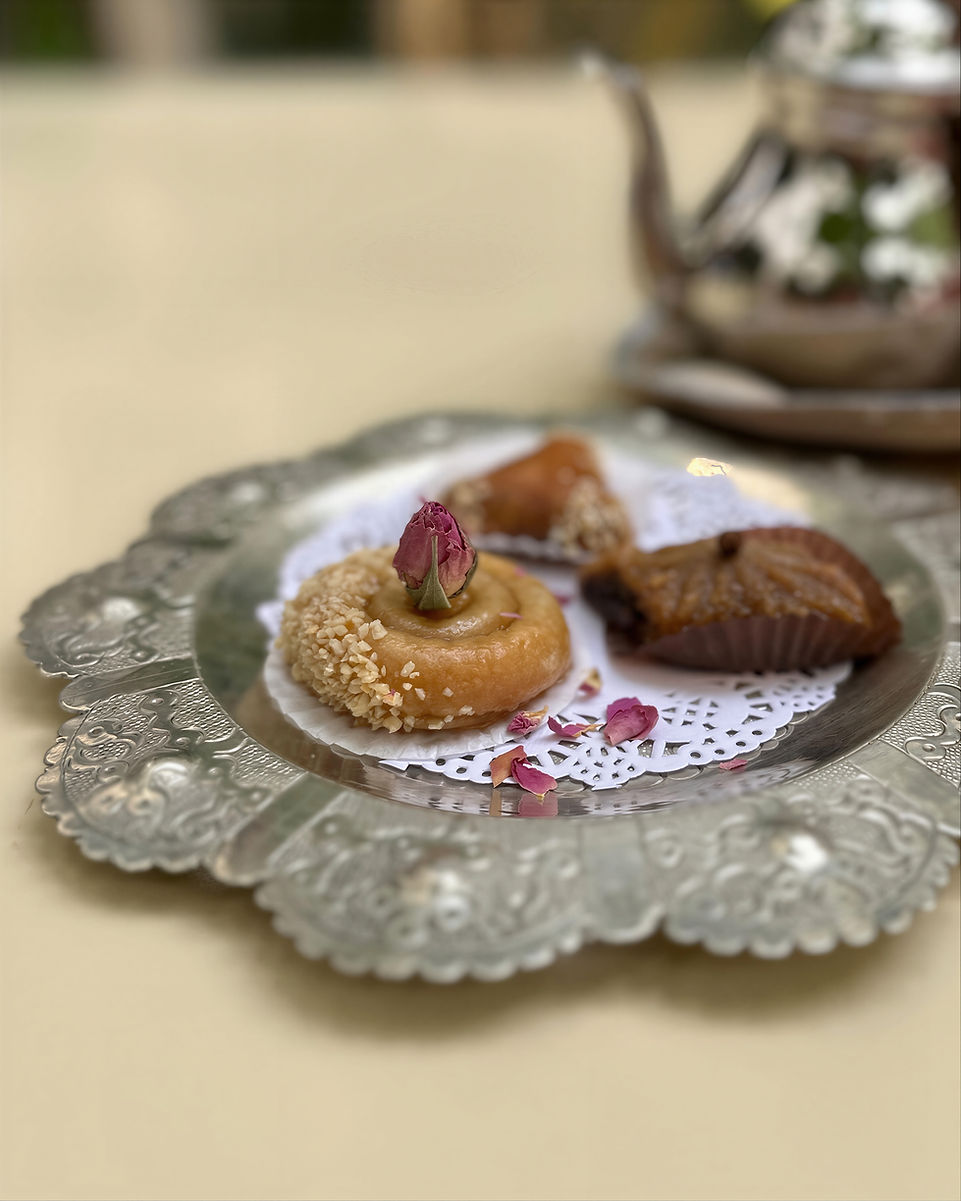
The Pastry Atelier
After the distillery, the guest journey continues into a pastry atelier. This addition was a major strategic enhancement to the initial brief. The pastry atelier was designed not as an independent food outlet, but as a logical extension of the floral and botanical universe developed in the earlier rooms. Floral waters produced through the distillery are reused in pastry creations, creating continuity across beverage, food and retail. This edible continuity is important. It gives the project greater coherence, broadens the range of guest interaction with the concept and creates new commercial opportunities beyond the rooftop itself. The pastry atelier also enables take-away formats, gift boxes and retail-driven product logic, helping the project generate revenue outside the limits of seated beverage consumption.


A Signature Welcome Drink
Mixomania also designed a welcome drink built around clarified almond water in double texture. This drink was conceived as a symbolic introduction to the experience. Its structure evokes purity, origin and transformation, while also expressing a more refined and contemporary beverage language. As a first gesture, it sets the tone of the venue and signals that the hospitality experience has been intentionally choreographed from the outset. A strong welcome drink is not a minor detail. In high-value hospitality environments, it plays an important strategic role by raising perceived sophistication, anchoring memory and immediately immersing the guest in the logic of the concept.


A Zero-Proof Botanical
Bar Program
One of the defining choices of the project was to build the cocktail offer entirely around a zero-proof beverage program. This is strategically powerful for several reasons. It aligns with the identity of the tea house, strengthens differentiation, makes the concept more culturally coherent and widens its relevance across different audiences and moments of the day. It also places botanicals, floral waters, tea and ingredient storytelling at the center of the beverage experience. Rather than treating alcohol-free drinks as secondary alternatives, Mixomania positioned them as the core creative language of the rooftop and distillery journey. This transforms the bar into a fully-fledged destination in its own right, while keeping the concept distinctive within the wider hospitality landscape. The menu was structured in multiple parts, including serves that could also be offered directly in the distillery space, reinforcing continuity between rooms and creating a more immersive beverage progression.


Moroccan Tea Rituals Reimagined
Moroccan tea is one of the foundational pillars of the project, but it was not left in a generic or background role. Mixomania rethought the tea rituals of the venue in a way that preserved cultural depth while increasing intentionality, consistency and experiential value. The objective was not to dilute tradition, but to frame it more clearly as part of the guest journey. This matters because tea is not only a beverage category here. It is part of the identity architecture of the concept. It connects the courtyard experience, the broader tea house positioning and the idea that Morocco’s beverage heritage can be both respected and reinterpreted. By reworking the tea ritual logic, the project gains stronger authenticity, stronger memory value and stronger relevance for guests seeking both cultural grounding and refined hospitality.
A Moroccan Latte Program
Around Amlou
To expand the concept beyond traditional tea and evening rooftop consumption, Mixomania also developed a Moroccan latte program centered around Amlou. This was an important strategic move. It allows the venue to attract a younger and broader daytime audience while building a bridge between local flavor heritage and contemporary café culture. It also strengthens daypart coverage by making the offer more relevant across multiple consumption moments. The Moroccan latte program contributes to a more resilient commercial model because it creates reasons to visit outside the rooftop’s peak moments. It allows the venue to speak to guests seeking comfort, curiosity, café-style discovery or a softer entry point into the concept. In hospitality terms, it helps broaden the amplitude of the offer without weakening the identity of the project.

Custom Tea and Spice Blends
To reinforce the concept’s sensory identity and retail depth, Mixomania also developed a series of tea and spice blends. These blends serve both the on-site guest experience and the commercial extension of the concept through boutique sales. They strengthen differentiation, give the venue more ownable products and allow the guest to take part of the experience home. This type of product logic is highly valuable because it transforms a hospitality venue into a broader experiential brand system. Instead of relying only on in-seat consumption, the project creates opportunities for after-visit memory, gifting, repetition and additional spend. The blends are also aligned with the wider narrative of regionality, ritual and ingredient storytelling established throughout the journey.
A Complementary
Plant-Based Culinary Offer
Mixomania also developed the food direction of the concept in close complementarity with the beverage program. The culinary logic was imagined as fresh, vegetal, living and lightly keto-inspired, with a strong focus on vegetables, seasonal plants and lighter compositions. This was not designed to compete with the beverage identity of the venue, but to support it. In the evening, the food offer works as a natural pairing extension of the zero-proof cocktail experience. This allows the rooftop and wider concept to evolve from a beverage destination into a more complete tasting environment. It also increases the time guests spend within the experience and expands revenue potential through pairing and bundled formulas. Dedicated offers and menu formulas were therefore considered as part of the broader strategy, ensuring that kitchen and bar support one another rather than operate as separate commercial silos.

Retail Logic
and Revenue Diversification
One of the most commercially important contributions of Mixomania’s expanded vision was the integration of a retail and take-away layer. Floral waters produced through the distillery are designed to be available in the boutique. Tea and spice blends can also be sold as standalone products. The pastry atelier adds take-away pastries and boxed formats that were not part of the initial brief. Together, these components transform the project into a hybrid hospitality-retail ecosystem. This has a direct commercial implication. The pastry and retail logic supports an estimated 15% increase in average ticket through upselling. That increase is not the result of an artificial pricing tactic. It comes from a richer and more coherent concept that creates more touchpoints, more desirability and more reasons for guests to buy across categories.

The Rooftop as the Final Bouquet
The rooftop remained central to the project, but its meaning changed fundamentally. Rather than being the sole destination of the concept, it became the final bouquet of a carefully orchestrated journey. By the time guests reach it, they have already encountered Moroccan tea culture, botanical sourcing, visible product storage, floral distillation and pastry continuity. The rooftop therefore benefits from a much richer buildup in emotional, cultural and sensorial terms. The rooftop was also conceived as a more contemporary counterpart to the traditional atmosphere of the riad’s inner courtyard. This intentional contrast allows the property to address multiple sensibilities within one hospitality environment. The courtyard expresses rooted heritage. The rooftop expresses a more modern, exploratory and atmospheric interpretation of the same conceptual universe. This duality is one of the strongest strategic features of the project. It allows the venue to appeal both to guests seeking traditional Moroccan hospitality and to guests looking for a fresher, more contemporary destination experience. The rooftop has a capacity of 140 guests, giving it significant commercial potential as a destination space.
A Fully Vegetated
Contemporary Landscape
The rooftop was imagined as a fully vegetated botanical landscape inspired by the rural regions of Morocco. Rather than relying on generic decorative greenery, the planting approach draws from regional visual references including cacti, wild grasses and wheat-like textures selected in relation to both place identity and climate resilience. These choices help root the rooftop in a Moroccan landscape language while also adapting the environment to the realities of heat and weather. This planting strategy is not merely aesthetic. It reinforces the broader concept logic by extending the botanical narrative into the final destination space. The rooftop becomes an immersive environment where the guest no longer simply consumes a beverage inspired by plants, but is surrounded by a landscape expression of that same world. It also supports the modern identity of the rooftop, helping distinguish it from the more traditional emotional language of the courtyard below.

Local Craftsmanship
and Custom Furniture Design
Mixomania’s involvement also extended into the physical and material identity of the project. Around twenty pieces of furniture were specially designed for the venue and developed in collaboration with local artisans. This contributed to a stronger sense of place, greater conceptual coherence and a more grounded relationship between the design language of the project and Moroccan craftsmanship. This dimension matters because premium hospitality is shaped not only by menu logic and storytelling, but by how the environment physically supports the experience. By integrating custom furniture and local know-how, the project strengthens authenticity while giving the concept a more distinctive and ownable visual language. It also demonstrates that Mixomania’s role went beyond beverage creation into the broader construction of a hospitality identity.


FURNITURE / LIGHTING
STUDIO DESIGN
A BESPOKE DESIGN ATELIER TRANSLATING
HOSPITALITY CONCEPTS INTO FURNITURE, OBJECTS,
MATERIALS AND SPATIAL DETAILS
A Fusion of :
Carft, History & Design
es Ateliers Mixologica is the design extension of Mixomania. Born from a shared passion for design, history, craftsmanship and material culture, it allows selected hospitality projects to be developed not only as concepts, but as fully embodied environments.
Where Mixomania defines the strategic direction of an experience — its positioning, its rituals, its guest journey and its storytelling — Les Ateliers Mixologica designs the objects, furniture and material details that make that world tangible. The ambition is never to add decoration for its own sake. It is to create pieces that are perfectly aligned with the narrative, atmosphere and functional reality of each project.
For the projects that require it, Les Ateliers Mixologica develops bespoke furniture and custom objects designed specifically for hospitality use. Each piece is conceived in close coherence with the universe of the venue, the cultural references it draws from, the story it tells and the way guests are meant to move through it. This makes the design language more than aesthetic. It becomes part of the experience itself. A key principle of the atelier is local collaboration. Every project is developed with local artisans, allowing the final pieces to carry not only visual coherence, but also a deeper connection to place, know-how and material authenticity. This approach creates a more grounded and more meaningful form of luxury, where design is inseparable from craftsmanship.
1112 Tea House
Tailored Collection Creation
For the Marrakech project, around twenty custom pieces were conceived across both decorative and functional categories.
The collection was imagined as a continuous dialogue between tradition and innovation, with every object contributing to a coherent hospitality world. Mixomania designed a monumental theatrical table, oversized benches, metal-and-ceramic tables, a collection of glazed ceramic pots, sculpted stone counters with bas-reliefs echoing the same ornamental motifs used throughout the ceramic language of the project, as well as riad-inspired arches and doors. Two complementary collections were also imagined: one articulated around white mineral and powder-coated tones, the other around copper finishes used notably in lighting pieces and customisable elements depending on each room. Across the collection, the intention was to create a refined play between white powder-coated metal, hammered copper, glazed ceramics, sculpted cement bas-reliefs, zellige surfaces and tactile material contrasts. The result is not a series of isolated objects. It is a coherent design system built to support hospitality storytelling. Every piece is conceived to strengthen atmosphere, guest perception, functional use and emotional continuity across the experience. This is what defines the role of Les Ateliers Mixologica within Mixomania’s wider approach: not simply designing furniture, but translating a hospitality concept into a fully lived material language.

BOTANIQUE Bar
Botanical bas-reliefs - hand-sculpted cement

RIAD Family Table
Patinated metal framework, powder-coated copper - d. 300 cm

RIAD Family Bench
Metal framework, powder-coated white - l. 350 cm

RIAD Stool / Tea table
Metal framework, powder-coated white

BOTANIQUE Tea table
Metal framework, glazed ceramic top, botanical motifs, ecru


BOTANIQUE Ceramic
Glazed ceramic vases, botanical motifs, ecru


RIAD Lamps
Glazed ceramic chandeliers / hammered copper - l. 200–300 cm

RIAD Theatrical entrance
A theatrical threshold in powder-coated ecru metal
and patinated copper / h. 220 cm


RIAD Mobile mashrabiya
A powder-coated raw metal framework, and hammered copper bells

Business Impact
of the Reframed Concept
What began as a simple rooftop bar request evolved into a significantly stronger hospitality business model. By reframing the original brief, Mixomania did not only enrich the guest experience. It expanded the commercial performance of the property across time, audience, spend and product mix.
The first major impact was on operating amplitude. The original venue logic was built around a 10-hour trading window. The new concept added 6 additional hours of relevance and monetisable activity, bringing the total to 16 hours of operation. This represents a 60% increase in exploitable trading time, creating far greater revenue potential from the same address.
The second major impact was on average spend. By layering together the courtyard tea experience, the distillery tasting moment, the rooftop zero-proof bar, the pairing-oriented food offer, the pastry atelier and the retail logic, the project was able to increase average customer spend by 30%. On top of that, the take-away pastry and boutique extension created an additional upsell layer, generating a further 20% uplift on the relevant retail-driven transactions.
The beverage model itself was also designed for strong margin performance. The zero-proof cocktail program was structured around an average x8 coefficient, creating a theoretical gross margin profile of 87.5% before labour and overhead. This is a particularly strong advantage in a concept where perceived value is driven by ritual, storytelling, florals, tea culture and sensory complexity rather than alcohol cost.
The project also widened the venue’s addressable market. Instead of speaking only to guests looking for a traditional Moroccan tea ritual, the concept now engages several overlapping audiences:
- a daytime tea and cultural discovery audience,
- a younger and more contemporary daytime clientele through the Moroccan latte program,
- a more local clientele,
- an evening apéritivo-style audience,
- and guests seeking a modern rooftop destination rather than a purely traditional tea house experience.
This audience diversification is commercially important because it reduces dependence on a single moment of consumption or a single type of guest. It makes the venue more resilient, more relevant across dayparts and more attractive beyond a purely tourism-led demand pattern.
The food layer also strengthened monetisation. A tapas-style accompaniment offer and pairing-oriented dishes created additional reasons to consume beyond beverages alone, directly supporting ticket growth on the rooftop experience. At the same time, the pastry take-away component opened access to yet another customer profile: guests who may not sit for the full experience, but still purchase products from the concept.
Operationally, the project also improved cost efficiency.
The pastry component was added without extending the production schedule of the laboratory workshops, allowing the venue to generate additional revenue streams without proportionally increasing production-time costs. This creates a clearer contribution margin logic and makes the retail and pastry layer especially attractive from a business standpoint.
At a destination level, the 140-seat rooftop adds meaningful volume potential, while the rest of the journey increases perceived value before guests even arrive there. This means the final destination is not only larger in capacity, but stronger in desirability and easier to monetise at a premium level.
Overall, Mixomania transformed a limited rooftop brief into a more profitable and strategically complete hospitality platform :
+60% more operating time,
+30% higher average customer spend,
+ an additional 20% uplift on retail
and take-away transactions,
+a high-margin x8 zero-proof cocktail model,
- broader daypart relevance,
- more local and evening clientele,
- better use of underexploited spaces,
- and additional revenue streams through food, pastry and boutique sales.
This strategic transformation was delivered through a six-month consulting engagement, designed to provide the continuity and depth required to guide concept development, guest experience design and operational refinement. The advisory fee was set at EUR 3,900 per month, excluding travel and admission-related expenses billed separately when applicable.
This is the real value of the intervention: not simply creating a more beautiful concept, but building a more resilient, more monetisable and more commercially intelligent destination.

Deliverables
For 1112 The Moroccan Tea House Marrakech, Mixomania’s work can be understood through the following key deliverables :
- hospitality concept transformation
- guest journey design
- riad circulation redesign
- courtyard tea experience strategy
- Moroccan regional tea menu development
- botanical granary concept development
- visible cellar storytelling
- floral distillery concept development
- zero-proof beverage strategy
- distillery tasting format development
- signature welcome drink creation
- Moroccan tea ritual redesign
- tea and spice blend development
- Moroccan latte program around Amlou
- pastry atelier integration
- plant-based pairing food direction
- retail and take-away product logic
- upsell architecture
- rooftop botanical bar concept
- rooftop planting and landscape identity
- custom furniture design
- collaboration with local artisans
Why This Project Matters
1112 The Moroccan Tea House Marrakech is not simply a rooftop project. It is a demonstration of how a narrow hospitality brief can be transformed into a complete experiential and commercial ecosystem when the right strategic questions are asked early enough. Instead of delivering only a bar, Mixomania designed a progression. Instead of decorating unused rooms, Mixomania gave them purpose. Instead of limiting the concept to one consumption moment, Mixomania expanded it across tea, distillation, pastry, retail, daytime discovery and rooftop destination value. This project shows how beverage strategy, spatial sequencing, cultural storytelling, culinary complementarity and product logic can work together to create stronger hospitality value. Mixomania helps turn an initial venue brief into a complete hospitality system — from concept architecture and guest journey design to beverage strategy, rituals, retail logic, food pairing and revenue diversification.
Hospitality consulting
Mixomania
Mixomania is a Paris-based international hospitality consulting and beverage strategy studio shaping hotels, restaurants, bars, members’ clubs and premium venues through concept development, guest journey design, operational refinement and revenue-driven experience building. We do not approach hospitality as a collection of separate services. We build complete concept ecosystems where positioning, storytelling, circulation, food and beverage logic, rituals, service flow, retail extensions and profitability are designed to work together. Our role is to transform an initial brief into a stronger, clearer and more monetisable destination. For selected projects, this strategic work is extended through Les Ateliers Mixologica, Mixomania’s bespoke design atelier. Rooted in design, history, craftsmanship and material culture, Les Ateliers Mixologica develops custom hospitality furniture, decorative objects and functional design pieces tailored to each concept. Every object is conceived in coherence with the story being told, the emotional tone of the project and the practical realities of hospitality use. Working closely with local artisans, we create environments where furniture, materials, textures and decorative elements are not added for ornament alone, but integrated as part of the guest experience itself. This can include monumental tables, counters, benches, lighting pieces, ceramic collections, sculpted surfaces, bespoke doors, arches and other custom-designed objects that reinforce atmosphere, identity and sense of place. Together, Mixomania and Les Ateliers Mixologica help create hospitality concepts that are not only visually distinctive, but strategically sharper, operationally stronger and commercially more valuable.
bottom of page